


Can a multi-tag access control card reader read multiple access cards simultaneously?
Release Time : 2025-10-30
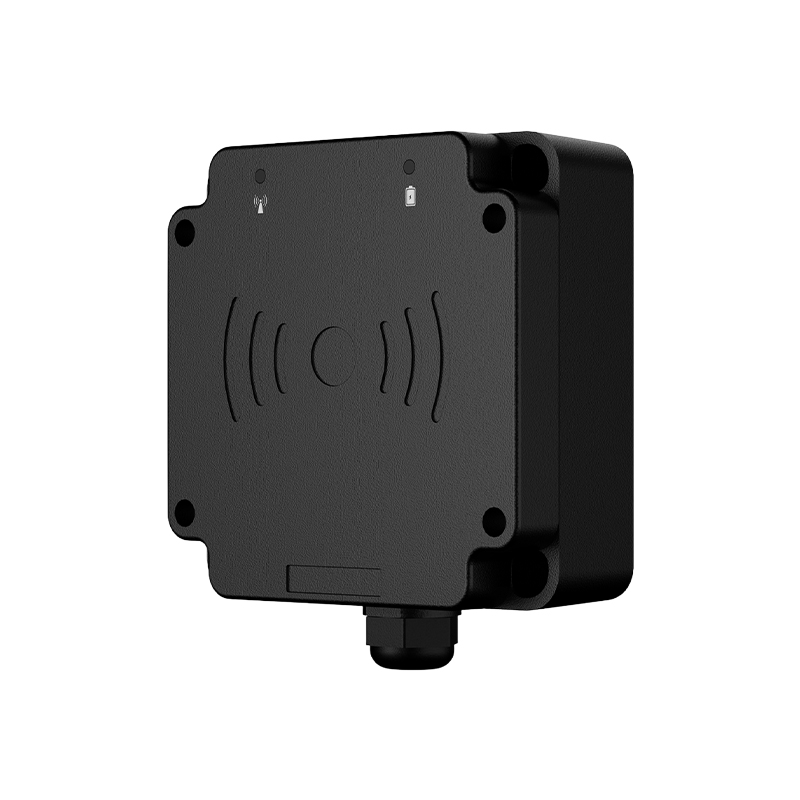
In modern, efficient waste management systems, long-range UHF RFID access control card readers, as a core identification technology, are gradually replacing traditional manual registration and short-range card swiping methods, injecting intelligence and automation into the waste collection process. The ability to read multiple access cards simultaneously is a key indicator of system performance, directly determining identification efficiency and data integrity in complex operational scenarios. Faced with fast-moving garbage trucks, multiple garbage bins approaching simultaneously, or environments with densely packed tags, the access control card reader's ability to accurately and quickly capture all target information becomes a decisive factor in the system's success.
Traditional low-frequency or high-frequency access control systems typically use a polling mechanism, recognizing only one tag at a time. When multiple tags enter the reading range simultaneously, signal conflicts easily occur, leading to some tags being missed or requiring repeated recognition. Modern long-range UHF RFID access control card readers, based on advanced multi-tag recognition algorithms, effectively solve this problem. Its core lies in employing anti-collision protocols, such as the time-slot-based ALOHA algorithm or deterministic binary tree search technology. By intelligently scheduling the response order of tags, signal overlap is avoided, ensuring that each tag can be independently identified in a very short time. This mechanism allows the access control card reader to maintain high throughput and low error rate even when faced with dozens or even hundreds of tags appearing simultaneously.
This capability is particularly important in practical waste management applications. For example, when a garbage truck carrying multiple RFID-tagged bins passes through a station, the system needs to instantly read all tags during the vehicle's movement. If the access control card reader cannot process multiple tags simultaneously, some bin information may be missed, resulting in incomplete data and affecting subsequent collection statistics, cost calculations, or resident behavior analysis. The multi-tag simultaneous reading function ensures that information on all containers involved in collection is completely recorded with each passage, achieving seamless data collection of "record as the vehicle passes," greatly improving operational efficiency and data accuracy.
Furthermore, multi-tag recognition also supports more complex management scenarios. In waste sorting demonstration areas, different types of waste bins may be transported by different vehicles or in different compartments of the same vehicle. The access control card reader, by reading all tags at once and combining them with preset classification codes, can automatically determine the collection status of each type of waste and generate a sorting and collection report. For large communities or commercial areas, multiple residents' or businesses' waste bins may be disposed of together; the system needs to accurately distinguish ownership to avoid confusion. Multi-tag capability allows the system to process multiple identity information in parallel, ensuring a one-to-one correspondence between data and entities, providing a data foundation for refined management.
The antenna design and signal processing capabilities of the access control card reader also significantly impact the multi-tag recognition effect. A directional antenna can focus the signal coverage area, reducing external interference and increasing the recognition probability of the target tag. Intelligent signal gain control can dynamically adjust the transmission power according to the environment, ensuring long-distance reading while avoiding excessively strong signals that could cause tag response confusion. The backend software performs real-time filtering and deduplication of the raw data, further improving the reliability of the recognition results.
Ultimately, the simultaneous reading of multiple-tag access cards is not only a reflection of technical performance but also the foundation of intelligent management. It enables waste management systems to process complex information flows in a contactless and efficient manner, reducing manual intervention, lowering operating costs, and providing comprehensive, real-time data support for urban waste management. With algorithm optimization and hardware upgrades, multi-tag recognition will become more stable and faster, driving smart sanitation to a higher level.
Traditional low-frequency or high-frequency access control systems typically use a polling mechanism, recognizing only one tag at a time. When multiple tags enter the reading range simultaneously, signal conflicts easily occur, leading to some tags being missed or requiring repeated recognition. Modern long-range UHF RFID access control card readers, based on advanced multi-tag recognition algorithms, effectively solve this problem. Its core lies in employing anti-collision protocols, such as the time-slot-based ALOHA algorithm or deterministic binary tree search technology. By intelligently scheduling the response order of tags, signal overlap is avoided, ensuring that each tag can be independently identified in a very short time. This mechanism allows the access control card reader to maintain high throughput and low error rate even when faced with dozens or even hundreds of tags appearing simultaneously.
This capability is particularly important in practical waste management applications. For example, when a garbage truck carrying multiple RFID-tagged bins passes through a station, the system needs to instantly read all tags during the vehicle's movement. If the access control card reader cannot process multiple tags simultaneously, some bin information may be missed, resulting in incomplete data and affecting subsequent collection statistics, cost calculations, or resident behavior analysis. The multi-tag simultaneous reading function ensures that information on all containers involved in collection is completely recorded with each passage, achieving seamless data collection of "record as the vehicle passes," greatly improving operational efficiency and data accuracy.
Furthermore, multi-tag recognition also supports more complex management scenarios. In waste sorting demonstration areas, different types of waste bins may be transported by different vehicles or in different compartments of the same vehicle. The access control card reader, by reading all tags at once and combining them with preset classification codes, can automatically determine the collection status of each type of waste and generate a sorting and collection report. For large communities or commercial areas, multiple residents' or businesses' waste bins may be disposed of together; the system needs to accurately distinguish ownership to avoid confusion. Multi-tag capability allows the system to process multiple identity information in parallel, ensuring a one-to-one correspondence between data and entities, providing a data foundation for refined management.
The antenna design and signal processing capabilities of the access control card reader also significantly impact the multi-tag recognition effect. A directional antenna can focus the signal coverage area, reducing external interference and increasing the recognition probability of the target tag. Intelligent signal gain control can dynamically adjust the transmission power according to the environment, ensuring long-distance reading while avoiding excessively strong signals that could cause tag response confusion. The backend software performs real-time filtering and deduplication of the raw data, further improving the reliability of the recognition results.
Ultimately, the simultaneous reading of multiple-tag access cards is not only a reflection of technical performance but also the foundation of intelligent management. It enables waste management systems to process complex information flows in a contactless and efficient manner, reducing manual intervention, lowering operating costs, and providing comprehensive, real-time data support for urban waste management. With algorithm optimization and hardware upgrades, multi-tag recognition will become more stable and faster, driving smart sanitation to a higher level.