


How does the Desktop Reader Writer enable an efficient RFID interactive experience with its compact design and dual USB architecture?
Release Time : 2025-12-26
In applications such as smart retail, asset management, access control and attendance systems, and logistics sorting, fast, stable, and convenient reading of RFID tag information has become a key aspect of improving operational efficiency. The Desktop Reader Writer—acting as a bridge connecting physical tags and digital systems—is becoming an ideal data entry device for fixed workstations such as desks, cash registers, and service windows due to its mini size, dual USB ports, built-in antenna, and full protocol support, thanks to its high integration and user-friendliness. Despite its small size, it integrates multiple advantages of radio frequency technology, communication protocols, and human-computer interaction, truly achieving a "plug-and-play, stable and reliable" operating experience.
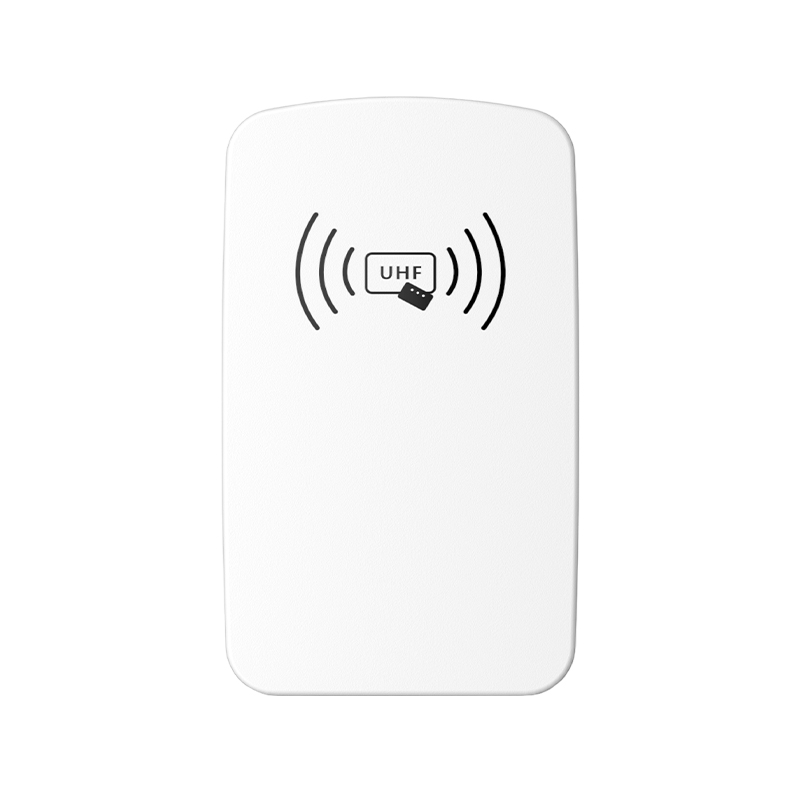
The core advantage of the Desktop Reader Writer is first reflected in its highly integrated and compact design. The entire device uses a compact casing, easily placed next to a monitor, on a cash register, or in a corner of the workstation, without occupying valuable space. The built-in high-performance antenna features an optimized layout, achieving a uniform field strength distribution in the 860–960MHz UHF band within a limited volume, ensuring rapid identification and stable reading/writing of ISO-18000-6C (EPC C1G2) standard tags. Whether the tag is attached to goods, documents, or asset cards, data interaction can be completed in milliseconds simply by bringing it close to the reading/writing area, eliminating the need for complex alignment or repeated attempts.
The dual USB interface design is key to its flexible human-computer interaction. One USB port is used for power supply and main communication, while the other is dedicated to simulated keyboard output (HID mode), allowing the read tag ID to be directly entered as text at any cursor position—whether it's a browser search box, an Excel cell, or a POS system interface. This "virtual keyboard" mechanism requires no driver or dedicated software installation and is compatible with Windows, macOS, Linux, and mainstream Android systems, significantly lowering the deployment threshold. Users experience it as naturally as using a regular keyboard, achieving a zero-learning-cost operating experience.
Regarding compliance and reliability, the desktop reader writer strictly adheres to international standards. Its radio frequency performance complies with global UHF RFID application standards and is FCC certified in the United States, ensuring legal and safe operation within open frequency bands without interfering with other electronic devices. The internal circuitry employs an anti-interference design, coupled with a stable power management module, maintaining read/write consistency during long-term continuous operation and preventing tag loss or misreading. It maintains a high recognition success rate even in complex electromagnetic environments like office settings.
It fully supports the ISO-18000-6C (EPC C1G2) protocol, giving it broad tag compatibility. Whether it's Gen2 standard paper tags, plastic card tags, or embedded micro-inlays, they can all be accurately read and written. This protocol, as the global common language for UHF RFID, ensures seamless integration with the existing tag ecosystem, protecting existing user investments while reserving space for future expansion.
Furthermore, the product emphasizes long-term stability and ease of maintenance. The casing is made of flame-retardant engineering plastic with excellent heat dissipation; the interfaces are reinforced to withstand frequent plugging and unplugging; the firmware supports remote upgrades, adapting to new functions or protocol optimizations. The entire unit is fanless and has no mechanical parts, operating quietly and suitable for quiet office environments. When an item is gently placed on the reader, the tag information is instantly converted into characters on the screen; when an employee card is brought near the desktop terminal, attendance is automatically recorded—behind all this, this mini reader works silently and efficiently. It makes no noise, yet facilitates smoother data flow; it's not complex, yet it bridges the physical and digital worlds with standardized interfaces. Because in the "last mile" of IoT implementation, true intelligence often resides in those meticulously designed, quietly operating small terminals—and this desktop reader writer is an elegant practice of this concept.
The core advantage of the Desktop Reader Writer is first reflected in its highly integrated and compact design. The entire device uses a compact casing, easily placed next to a monitor, on a cash register, or in a corner of the workstation, without occupying valuable space. The built-in high-performance antenna features an optimized layout, achieving a uniform field strength distribution in the 860–960MHz UHF band within a limited volume, ensuring rapid identification and stable reading/writing of ISO-18000-6C (EPC C1G2) standard tags. Whether the tag is attached to goods, documents, or asset cards, data interaction can be completed in milliseconds simply by bringing it close to the reading/writing area, eliminating the need for complex alignment or repeated attempts.
The dual USB interface design is key to its flexible human-computer interaction. One USB port is used for power supply and main communication, while the other is dedicated to simulated keyboard output (HID mode), allowing the read tag ID to be directly entered as text at any cursor position—whether it's a browser search box, an Excel cell, or a POS system interface. This "virtual keyboard" mechanism requires no driver or dedicated software installation and is compatible with Windows, macOS, Linux, and mainstream Android systems, significantly lowering the deployment threshold. Users experience it as naturally as using a regular keyboard, achieving a zero-learning-cost operating experience.
Regarding compliance and reliability, the desktop reader writer strictly adheres to international standards. Its radio frequency performance complies with global UHF RFID application standards and is FCC certified in the United States, ensuring legal and safe operation within open frequency bands without interfering with other electronic devices. The internal circuitry employs an anti-interference design, coupled with a stable power management module, maintaining read/write consistency during long-term continuous operation and preventing tag loss or misreading. It maintains a high recognition success rate even in complex electromagnetic environments like office settings.
It fully supports the ISO-18000-6C (EPC C1G2) protocol, giving it broad tag compatibility. Whether it's Gen2 standard paper tags, plastic card tags, or embedded micro-inlays, they can all be accurately read and written. This protocol, as the global common language for UHF RFID, ensures seamless integration with the existing tag ecosystem, protecting existing user investments while reserving space for future expansion.
Furthermore, the product emphasizes long-term stability and ease of maintenance. The casing is made of flame-retardant engineering plastic with excellent heat dissipation; the interfaces are reinforced to withstand frequent plugging and unplugging; the firmware supports remote upgrades, adapting to new functions or protocol optimizations. The entire unit is fanless and has no mechanical parts, operating quietly and suitable for quiet office environments. When an item is gently placed on the reader, the tag information is instantly converted into characters on the screen; when an employee card is brought near the desktop terminal, attendance is automatically recorded—behind all this, this mini reader works silently and efficiently. It makes no noise, yet facilitates smoother data flow; it's not complex, yet it bridges the physical and digital worlds with standardized interfaces. Because in the "last mile" of IoT implementation, true intelligence often resides in those meticulously designed, quietly operating small terminals—and this desktop reader writer is an elegant practice of this concept.